

Biofloc Farming vs FRP Tank Farms, Which Is the Better Investment for Modern Fish Farmers

Discover the key differences between Biofloc farming and FRP tank farms. Compare costs, maintenance, profitability, disease control, and production efficiency to find the best fish farming solution for long-term success
Biofloc Farming vs FRP Tank Farms: Which System Delivers Better Profits and Easier Management?
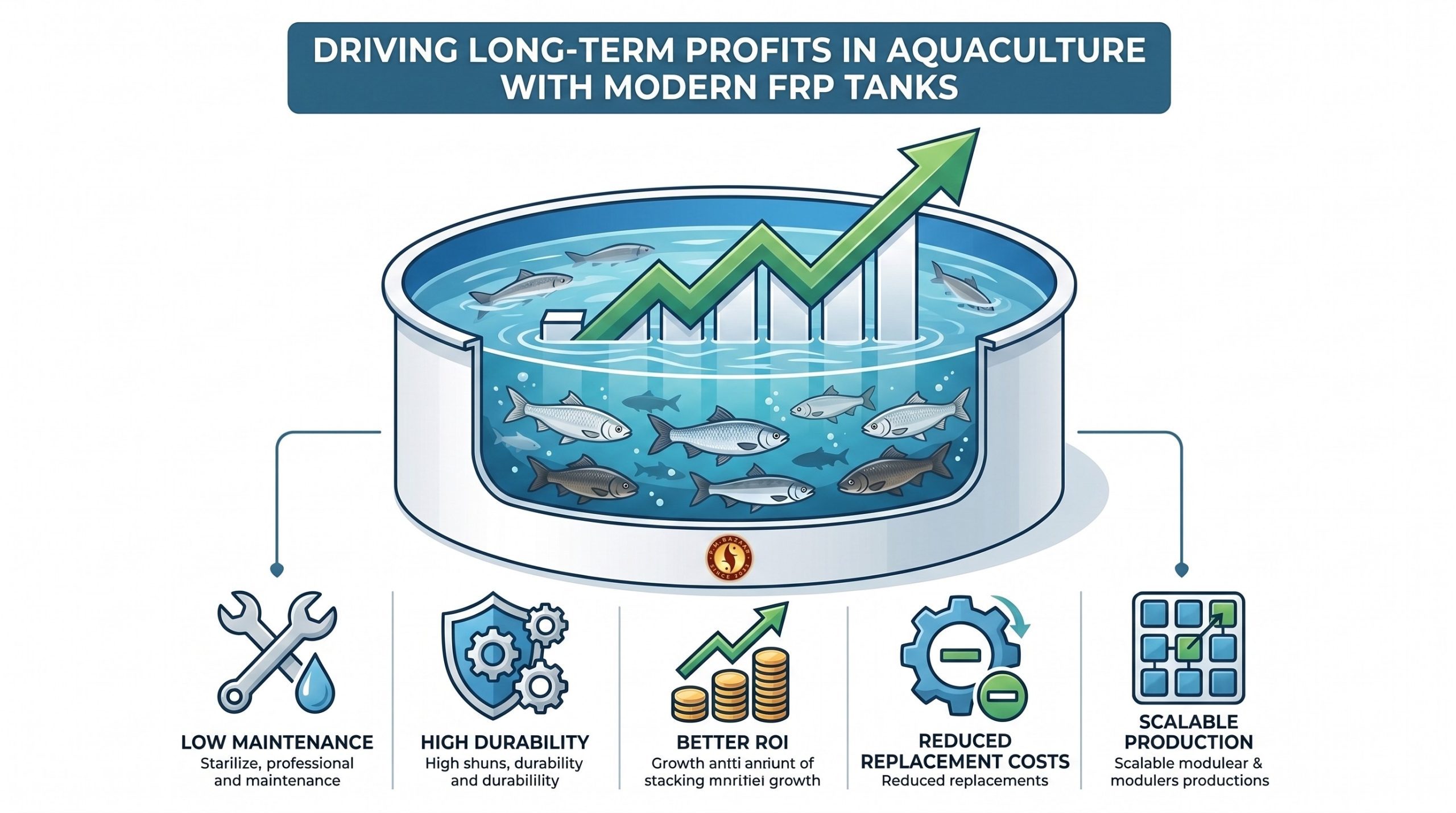
Aquaculture is evolving rapidly, and today’s fish farmers have more farming options than ever before. Two of the most popular systems are Biofloc tank farming and FRP tank farming. Both methods offer advantages over traditional pond culture, but they differ significantly in setup, management, durability, and long-term profitability.
For beginners and commercial aquaculture businesses alike, choosing the right system can determine the success of an entire farming operation.
In this guide, we’ll compare Biofloc farming and FRP tank farms in detail, helping you make an informed investment decision while understanding why many modern farmers are shifting toward FRP-based aquaculture systems.
What Is Biofloc Farming?
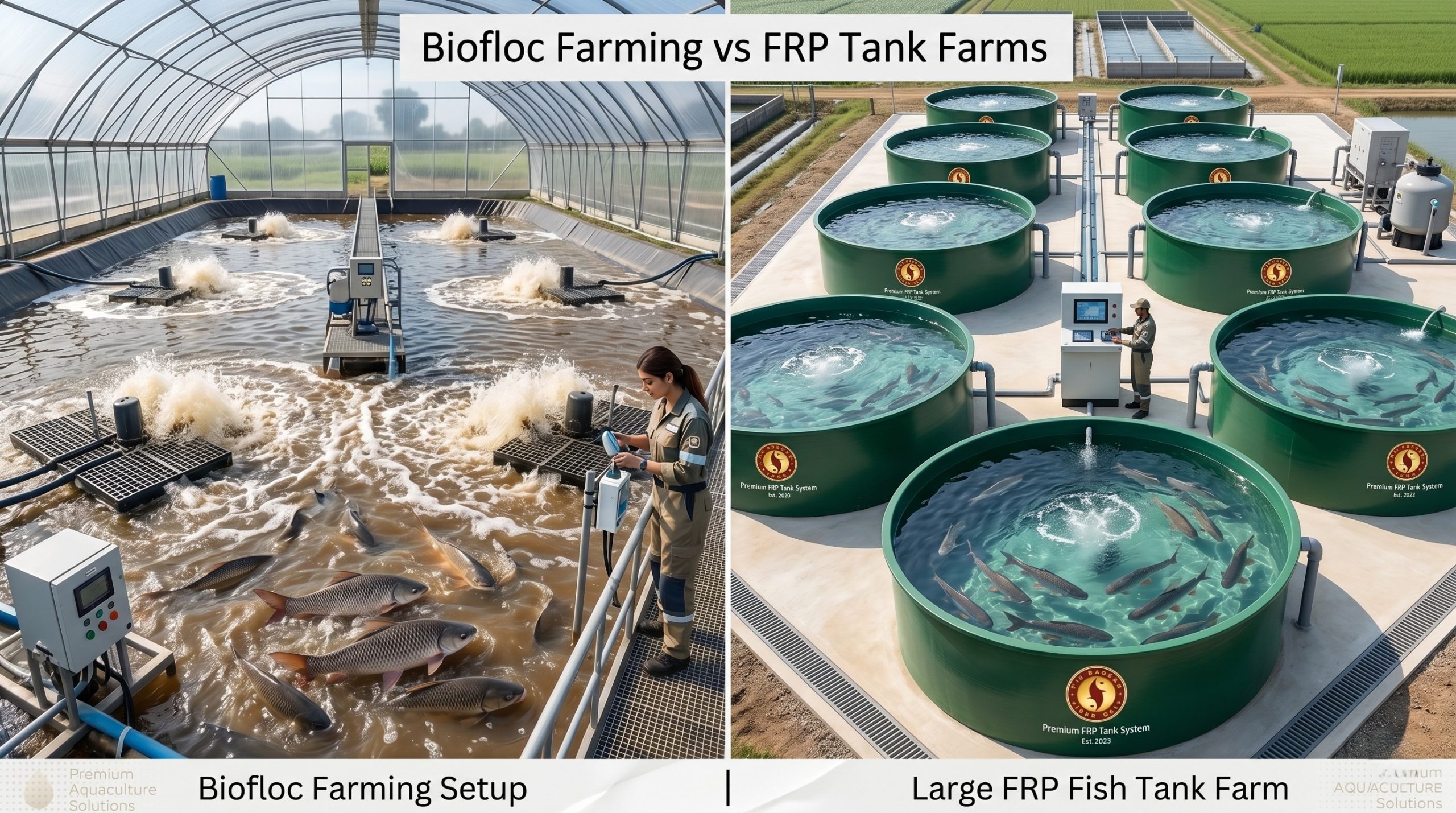
Biofloc farming is an intensive aquaculture method that relies on beneficial microorganisms to convert fish waste into protein-rich microbial biomass. This process helps maintain water quality while reducing feed costs.
Biofloc systems typically require:
- Continuous aeration
- Careful monitoring of water parameters
- Carbon source management
- Skilled technical operation
While Biofloc can achieve high stocking densities, success depends heavily on maintaining biological balance within the system.
What Is an FRP Tank Farm?
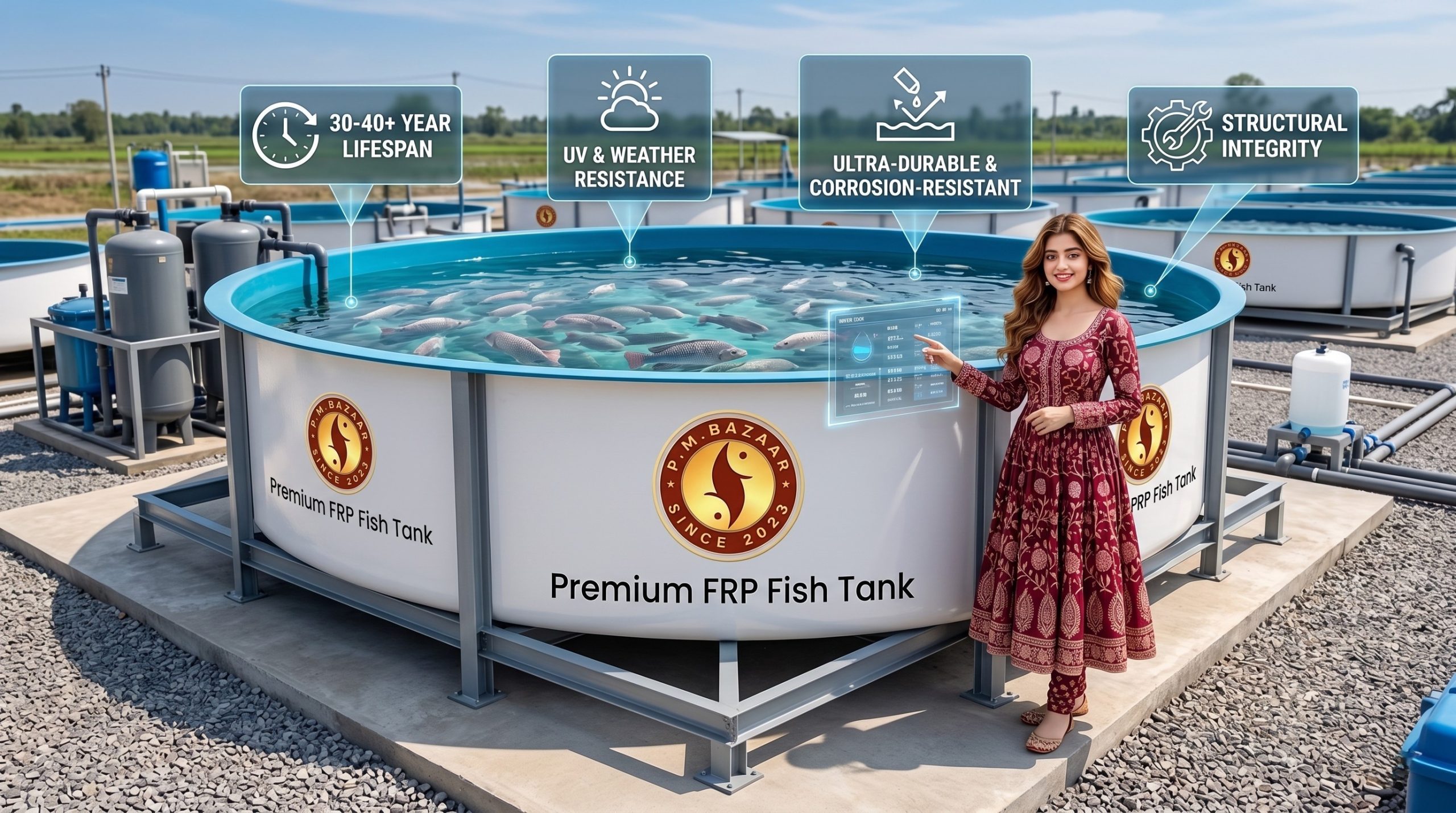
FRP (Fiber Reinforced Polymer) tanks are specially designed aquaculture tanks built using high-strength composite materials. These tanks provide a controlled environment for fish farming, shrimp farming, pearl farming, hatcheries, and nursery operations.
FRP tanks are known for:
- High durability
- Smooth and hygienic surfaces
- Easy cleaning
- Long service life
- Flexible installation options
Unlike Biofloc systems, FRP tanks focus on providing a clean, controlled farming environment with simplified management and greater operational flexibility.
Biofloc Farming vs FRP Tank Farming: Side-by-Side Comparison
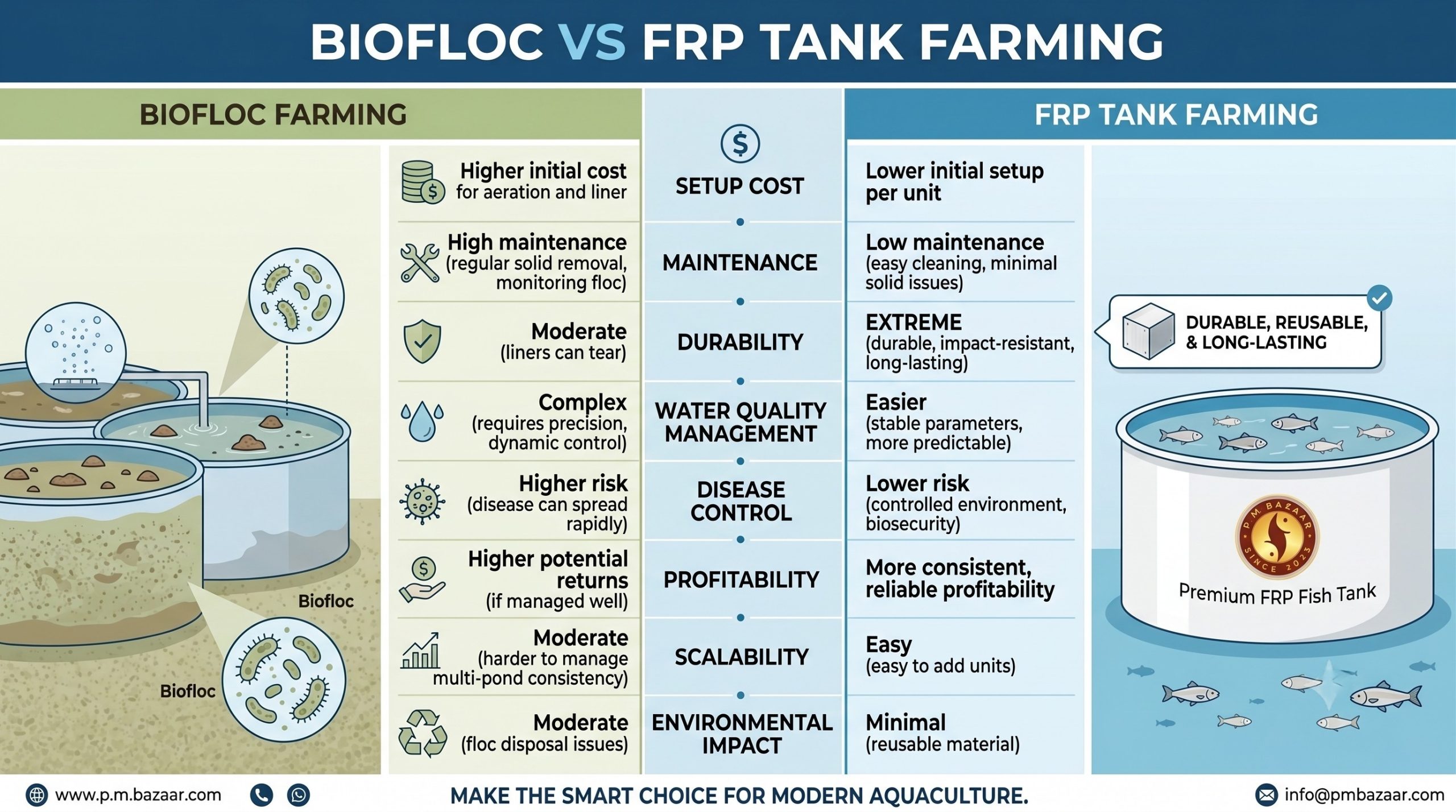
Feature | Biofloc Farming | FRP Tank Farming |
Initial Setup Cost | Moderate | Moderate to High |
Water Management | Complex | Simple and Controlled |
Technical Knowledge Required | High | Low to Moderate |
Maintenance | Daily Monitoring Required | Easy Maintenance |
Disease Risk | Can Increase if Water Balance Fails | Lower with Proper Management |
Tank Durability | Often Limited | 30–40 Years or More |
Cleaning Process | Difficult | Fast and Easy |
Scalability | Moderate | Excellent |
Production Control | Biological Dependency | High Operational Control |
Long-Term ROI | Variable | Highly Predictable |
Suitable for Beginners | Challenging | Beginner Friendly |
Multi-Purpose Use | Limited | Fish, Shrimp, Pearl Farming |
Setup Cost Comparison
Biofloc Farming
Biofloc systems may appear economical initially because they often use tarpaulin tanks and simple structures. However, costs quickly increase due to:
- Continuous aeration equipment
- Backup power systems
- Water testing tools
- Carbon source inputs
- Regular monitoring requirements
FRP Tank Farming
FRP tanks involve an upfront investment but provide long-term value through:
- Exceptional durability
- Minimal repair costs
- Lower replacement frequency
- Reusable infrastructure
For farmers planning long-term operations, the higher initial investment often translates into lower lifetime costs.
Space Requirement and Farm Flexibility
Biofloc Systems
Biofloc farms are designed to maximize production in limited space but require precise tank placement and aeration infrastructure.
FRP Tank Farms
FRP tanks can be installed:
- On rooftops
- In sheds
- Inside greenhouses
- On small farms
- In commercial aquaculture facilities
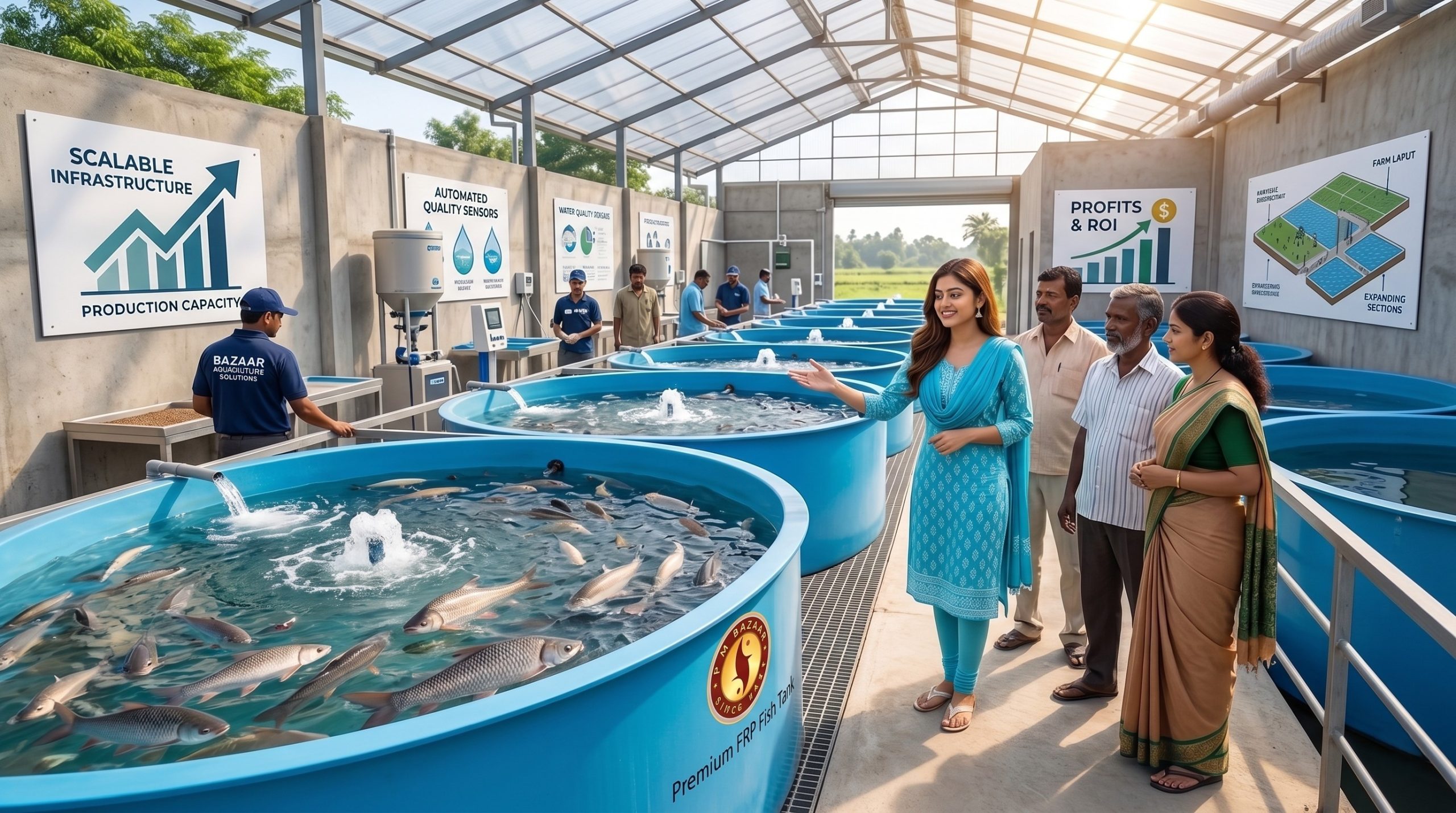
Their modular design allows farmers to expand operations gradually without redesigning the entire system.
Winner: FRP Tanks
Greater flexibility makes FRP tanks ideal for both small entrepreneurs and large-scale farms.
Water Quality Management
Challenges in Biofloc Farming
Biofloc systems require constant balancing of:
- Ammonia levels
- Carbon-to-nitrogen ratio
- Dissolved oxygen
- pH levels
- Floc density
A small management mistake can rapidly impact fish health.
Advantages of FRP Tanks
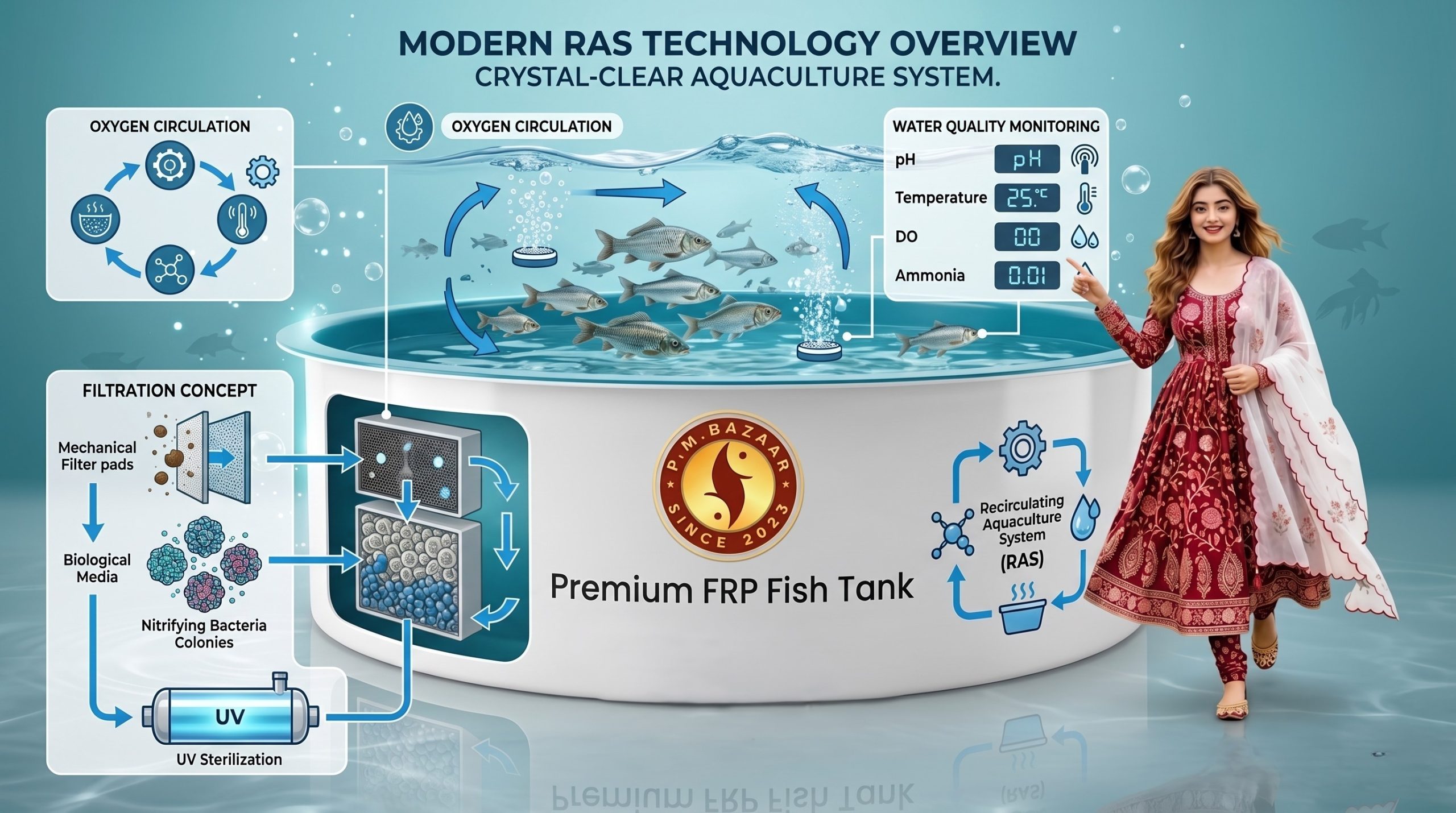
FRP tanks provide:
- Better visibility of fish behavior
- Easier water exchange
- Simpler cleaning
- Improved monitoring
This gives farmers greater control over production conditions.
Maintenance Requirements
Biofloc Maintenance
Farmers often spend significant time:
- Monitoring water chemistry
- Adjusting microbial populations
- Managing sludge accumulation
- Running aeration systems continuously
FRP Tank Maintenance
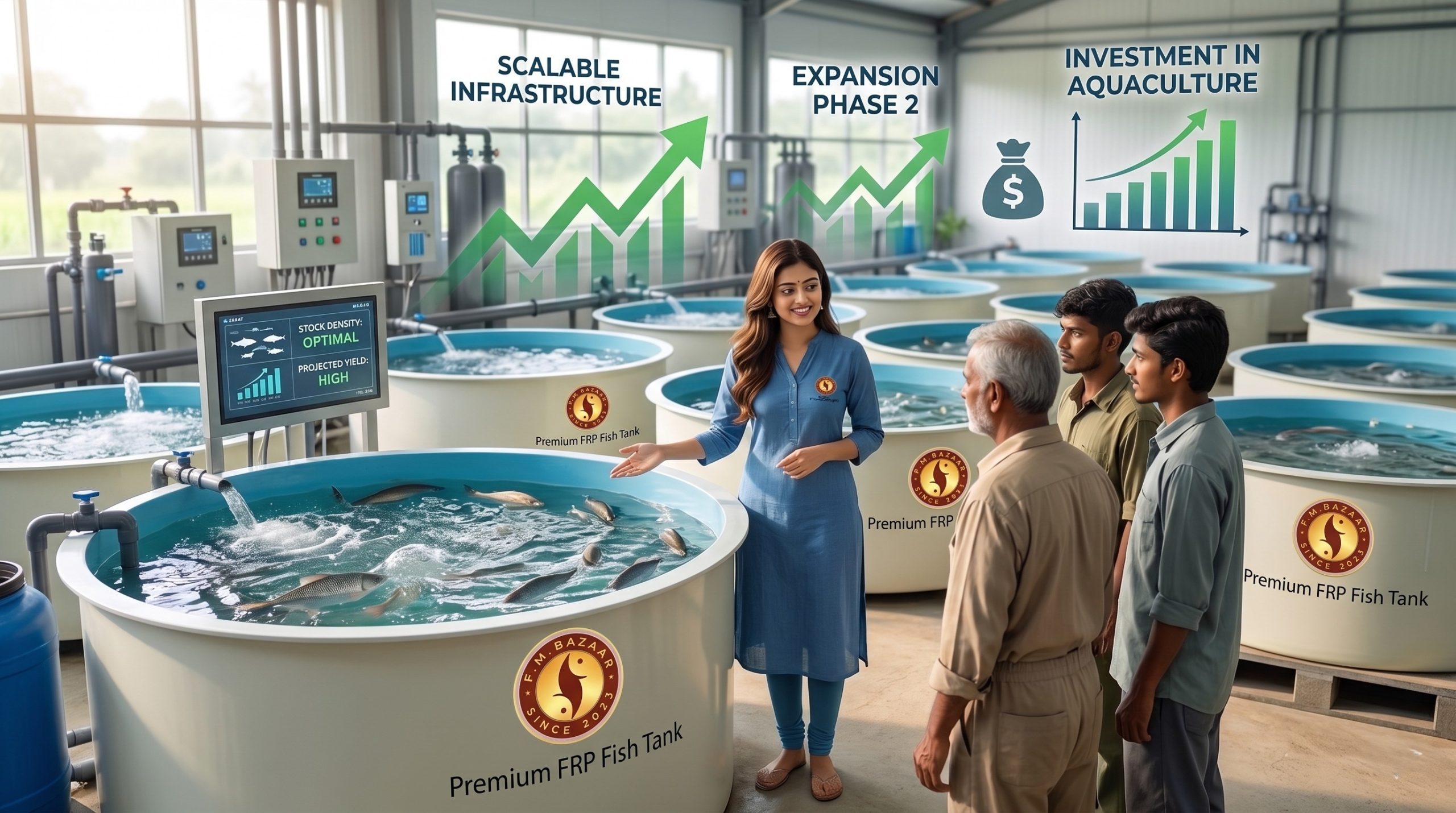
FRP tanks feature smooth inner surfaces that:
- Resist algae buildup
- Reduce cleaning time
- Improve hygiene
- Simplify routine maintenance
Many farmers report significantly lower labor requirements compared to intensive Biofloc operations.
Disease Control and Fish Health
Disease outbreaks can severely impact profitability.
Biofloc Systems
If water quality deteriorates unexpectedly, fish can experience stress, leading to disease risks and production losses.
FRP Tank Farms
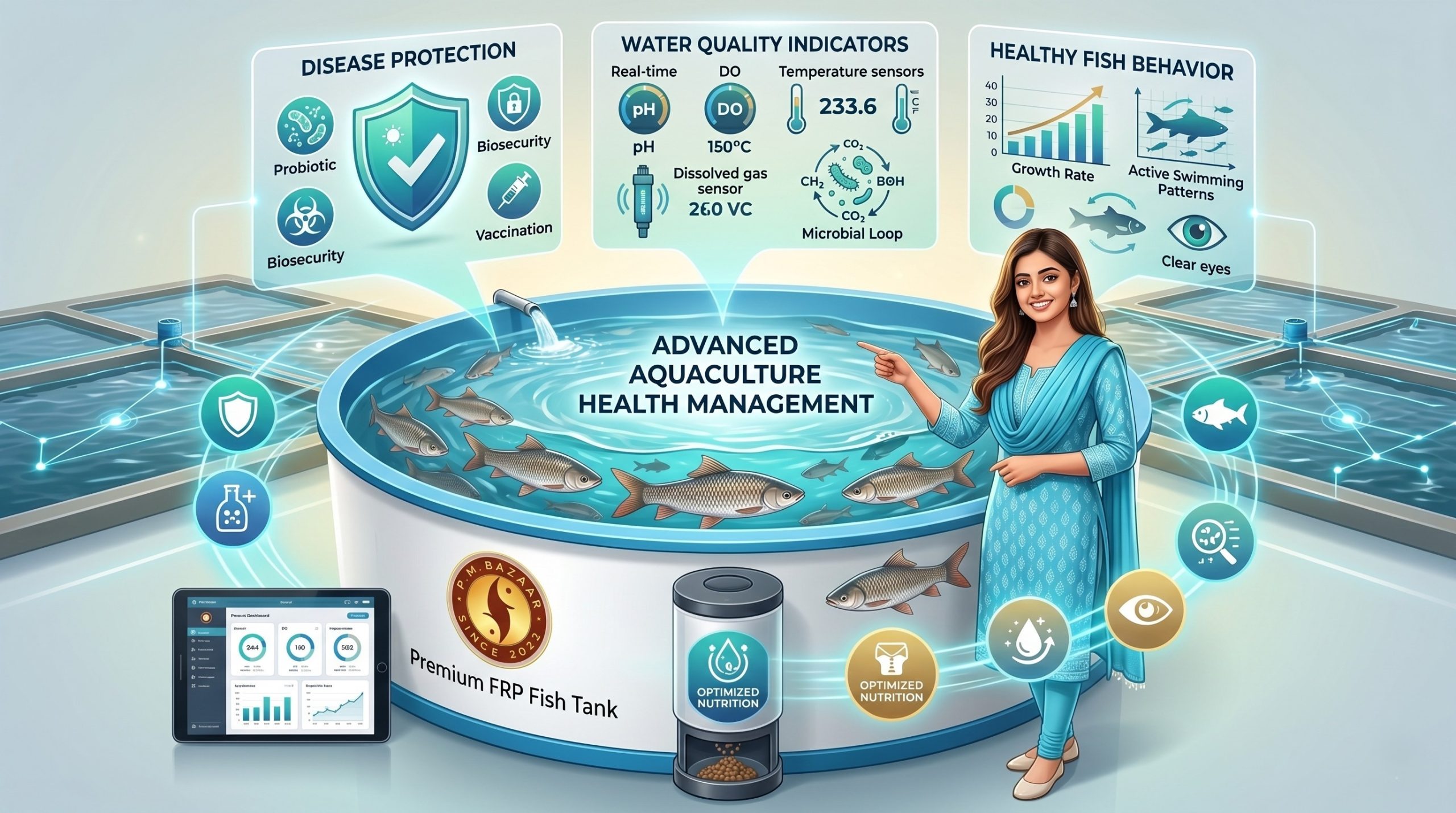
FRP tanks offer:
- Cleaner environments
- Better observation of fish
- Faster isolation of problems
- Easier sanitation procedures
This proactive management approach often helps reduce disease-related losses
Production Efficiency
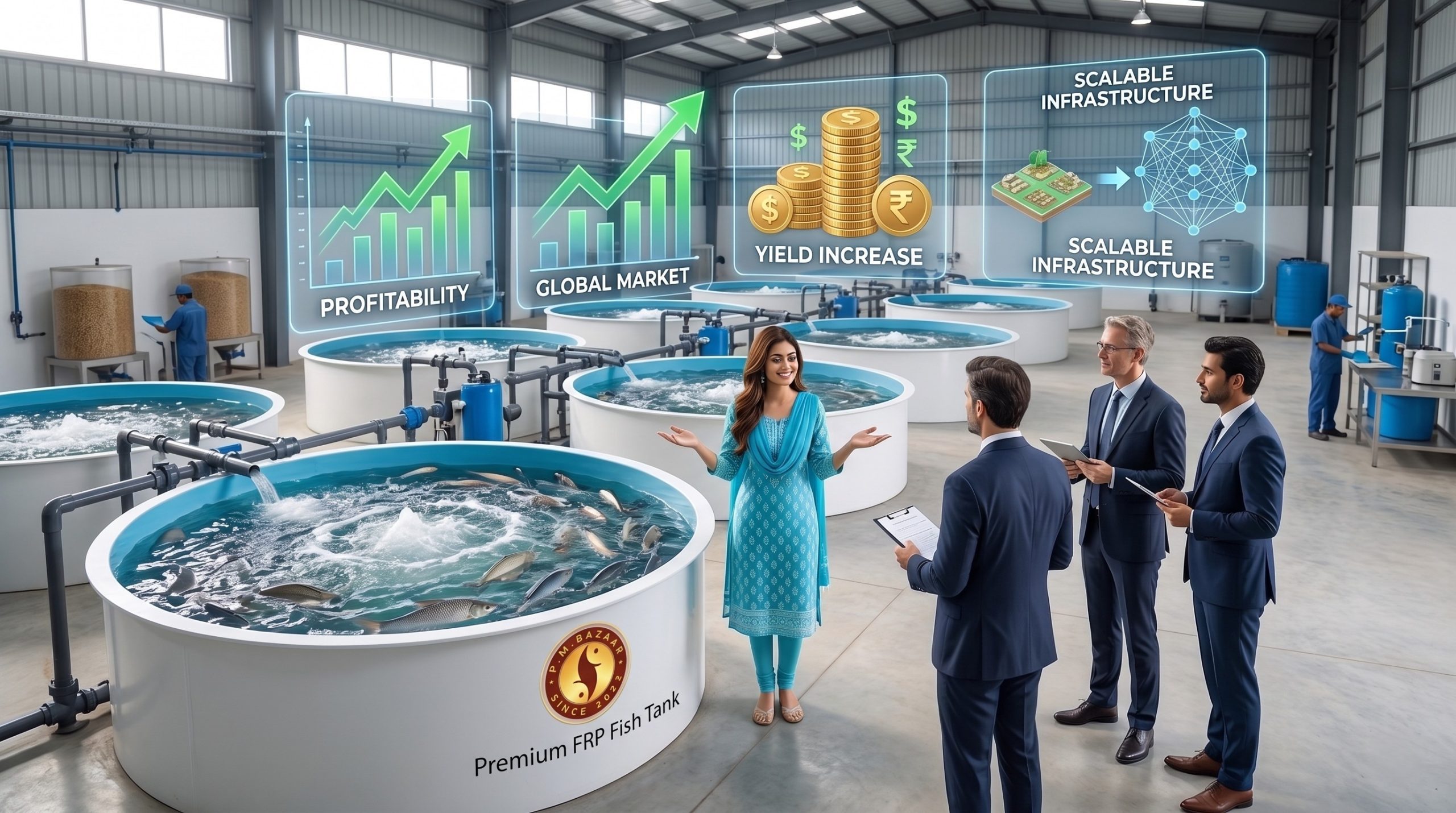
Both systems can achieve impressive production results when managed correctly.
Biofloc Farming
Advantages:
- Reduced water usage
- Potential feed savings
- High stocking density
Challenges:
- Greater technical complexity
- Higher management risk
FRP Tank Farming
Advantages:
- Consistent production
- Easier monitoring
- Better environmental control
- Scalable operations
Many commercial farmers prefer FRP tanks because consistency is often more valuable than maximising density alone
Durability: Where FRP Tanks Stand Out
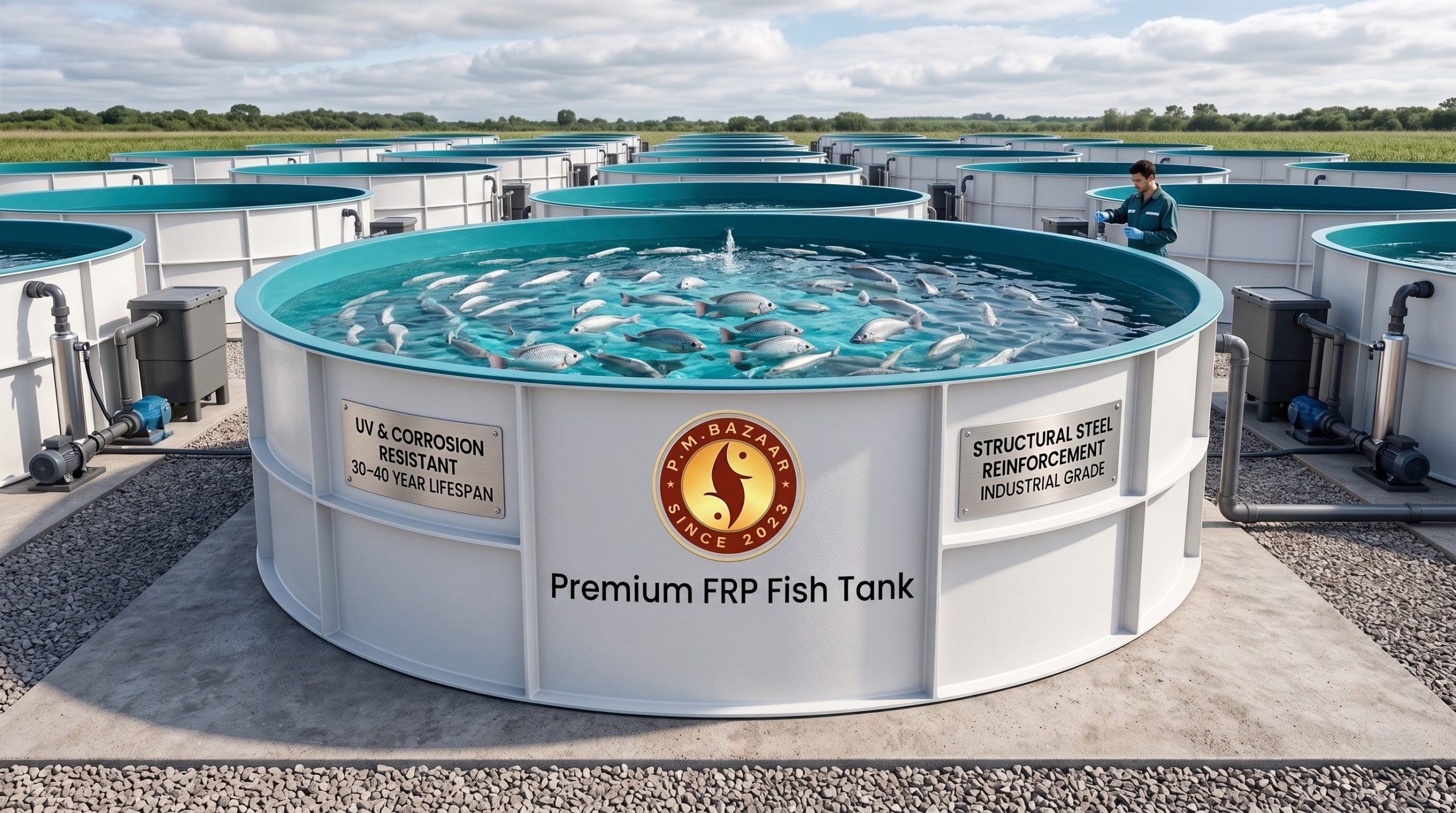
One of the biggest differences between the two systems is lifespan.
Traditional Biofloc tanks often rely on tarpaulin materials that may require periodic replacement.
High-quality FRP tanks offer:
- Corrosion resistance
- UV resistance
- Structural strength
- Weather resistance
- Long service life of 30–40 years or more
This makes FRP tanks one of the most durable aquaculture infrastructure investments available today.
Long-Term Profitability Analysis
Biofloc Farming
Profitability depends heavily on:
- Technical expertise
- Continuous monitoring
- Stable water quality
- Effective microbial management
Mistakes can quickly reduce profits.
FRP Tank Farming
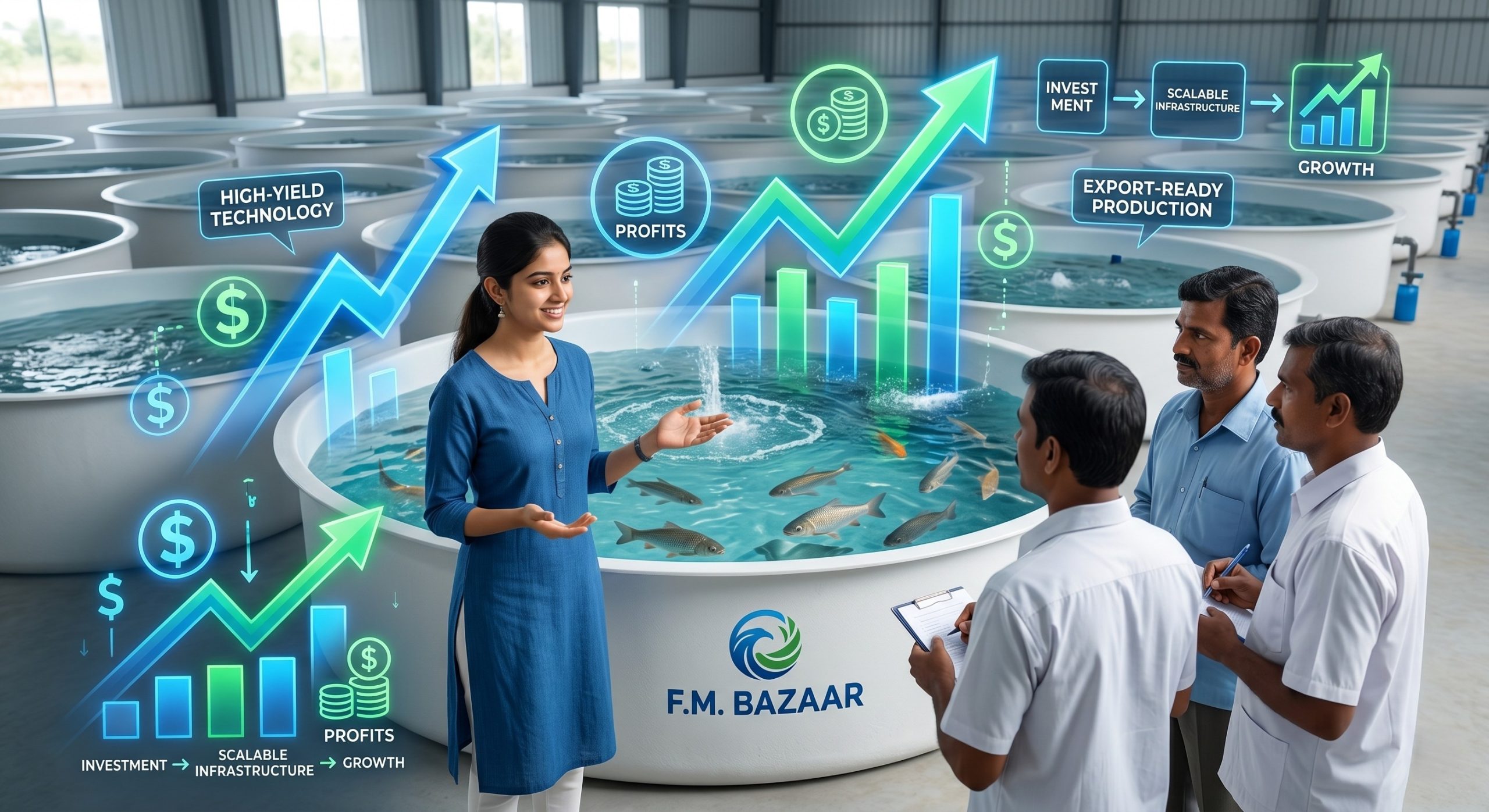
Profitability benefits include:
- Lower maintenance costs
- Reduced infrastructure replacement
- Better operational control
- Longer asset lifespan
- Multi-species farming capability
Over time, these advantages often generate a stronger return on investment.
Practical Applications of FRP Tanks
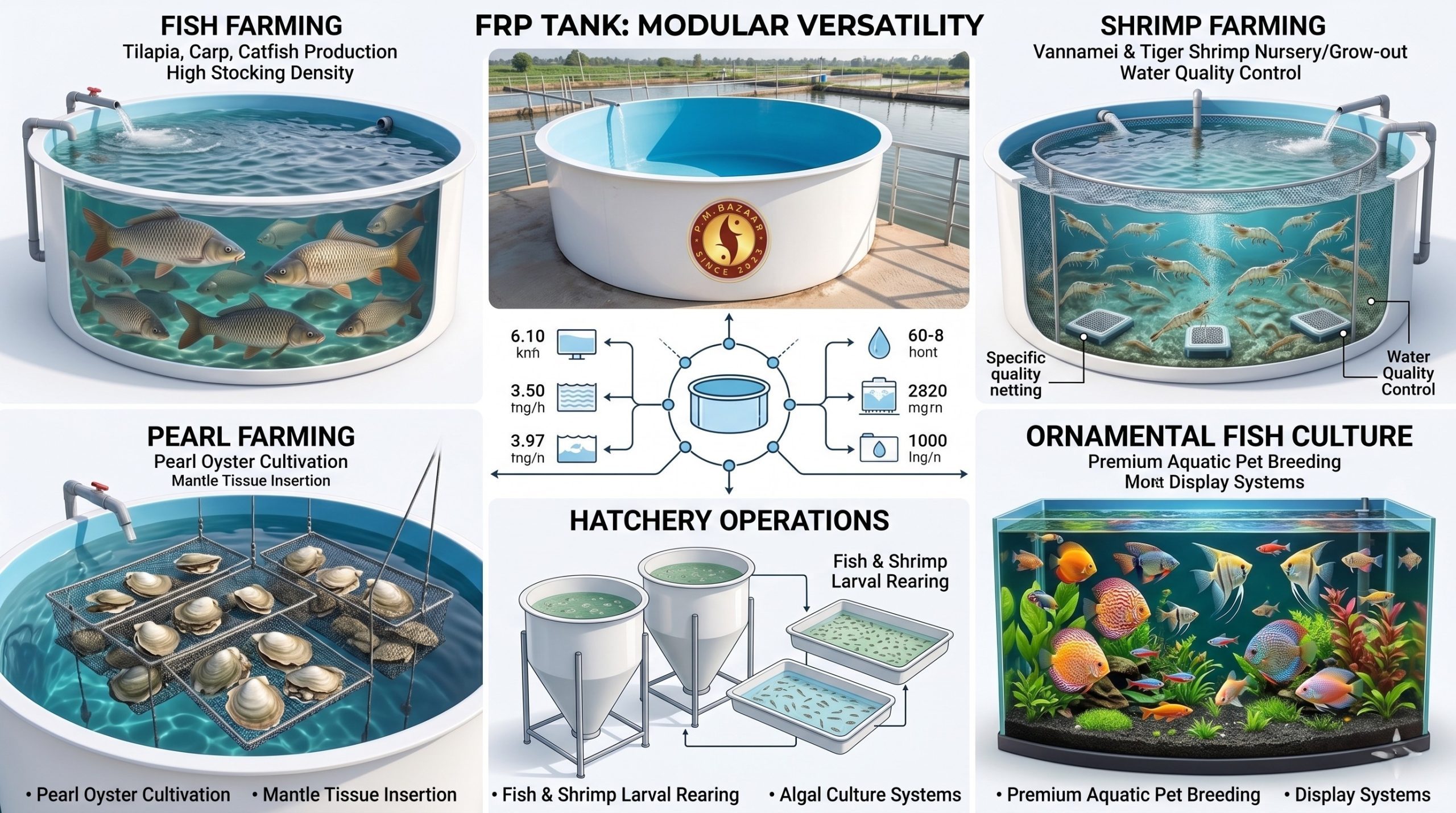
Modern FRP tanks are used for:
Fish Farming
- Rohu
- Catla
- Tilapia
- Pangasius
- Ornamental fish
Shrimp Farming
- Nursery culture
- Grow-out systems
- Seed rearing
Pearl Farming
- Freshwater pearl oyster culture
- Controlled breeding programs
Hatcheries
- Fingerling production
- Broodstock management
- Quarantine systems
Their versatility allows farmers to diversify income streams without investing in separate infrastructure.
Why More Farmers Are Choosing FRP Tanks
The growing popularity of FRP tanks is driven by several factors:
- Long lifespan
- Easy maintenance
- Better disease management
- Flexible installation
- Professional appearance
- Multi-purpose applications
- Strong long-term profitability
For farmers seeking a dependable and scalable fish farming solution, FRP tanks provide a balance of performance, convenience, and durability.
Final Verdict: Biofloc vs FRP Tank Farming
Biofloc farming can be highly productive when managed by experienced operators who understand complex water quality dynamics. However, it requires constant attention and technical expertise.
FRP tank farming offers a cleaner, more controlled, and easier-to-manage alternative that suits beginners, growing businesses, and commercial aquaculture enterprises alike.
When considering durability, maintenance, scalability, and long-term return on investment, FRP tanks emerge as one of the smartest infrastructure investments available for modern aquaculture.
Ready to Upgrade Your Farm?
If you’re looking for a reliable aquaculture tank that delivers durability, flexibility, and long-term value, consider investing in a high-quality FRP tank for fish farming.
Whether you raise fish, shrimp, or pearls, FRP tanks provide the control and confidence needed to build a profitable and sustainable aquaculture business for decades to come.


